Posts

Showing posts with the label social interaction

Social Interaction 2: Examples from D&D, Naturalistic Interaction Mechanics, Ability Checks & Reaction Rolls

Image
  The previous post about social interaction  explored the different areas that social rules should cover. A relatively complete system should help resolve social situations when there is conflict and uncertainty, specifically: persuading others and resisting attempts at persuasion lying, recognizing falsehoods (related: seeking secret information, hiding information) maintaining relationships This article will look at different social mechanics in published games and see how (or whether) they represent these concepts. We will also look at how players can affect outcomes and what GMs are directed to consider when adjudicating interactions. Social Interaction Rules in D&D We will start with the big one, looking a social mechanics from the current edition, D&D 5E, and then look at variations from earlier iterations of the game. On page 185 in the 5th Edition Player's Handbook under social interaction the section divides interaction into roleplaying and ability checks. Un...
Social Interaction 1: What do social interaction mechanics need to do?

Image
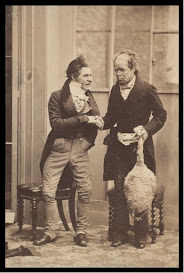
Camille Silvy In the last post I wrote about how social interaction and modelling unfamiliar worldviews is at the heart of the RPG experience. On the one hand, thrusting ourselves into alien situations and on the other, interacting with other people who are products of foreign milieus can broaden our own experience. There is a degree of sleight of hand here as all RPGs are hosted in our own imaginations, but experience gained through imagination is still real experience. Non-Designed Mechanics Social interaction is an important part of RPGs but it is often underserved in terms of game mechanisms. I think that because tabletop roleplaying is fundamentally a conversation, many designers tend to assume social interaction can be handled in a naturalistic manner without dedicated mechanics. Also, fish probably don't design ttrpg mechanics for breathing underwater. In fact, those pescatory designers are often right! For most interactions players can just use their inherent conversationa...

Philosophers, Heretics and Madmen

Image
Thales of Miletus I often think of tabletop roleplaying as a form of time travel, or even better, mind travel. It is a chance to jump out of the circumstances of one's own life and look at things differently. Other media can also allow a similar escape, but the two factors that differentiate roleplaying are that players must act and make choices and they must also simulate the world inside their own brain. This feeling of freedom, of seeing things from perspectives that you might never otherwise experience is one of the great joys of the hobby for me. Recently I read that Thales of Miletus was the first recorded practitioner (and possible inventor of) deductive reasoning. I was flabbergasted. The idea that something seemingly so fundamental as rationalist reasoning simply didn't exist as recently as 2600 years ago is actually kind of astounding.  If the past is a foreign country, then the distant past is an alien world. Imagine what it would be like to interact with someone wh...