Posts

Showing posts with the label psychology

WEIRD Worldbuilding

Image
WEIRD Worldbuilding   The Ebstorf Map This post is refers to the book The WEIRDest People in the World by Joseph Heinrich, which I have reviewed here . The WEIRDest People in the World isn't specifically about tabletop RPGs or worldbuilding. It is about cultural evolution and how certain packages of cultural norms, institutions and psychology emerged and developed over time into Western, educated, industrialized, rich and democratic societies today. The book does spend a lot of time discussing the kinds of features that affect societies' collective psychology, institutions and ability to scale to larger populations. A big concept is the idea that different kinds of institutions are necessary to bond society together. In this post I will try to lay out what I have gleaned and how it can be used by prospective worldbuilders.  Laying out the building blocks: Clans & Family The vast majority of human societies historically have been based on kinship (familial) ties. There is a...
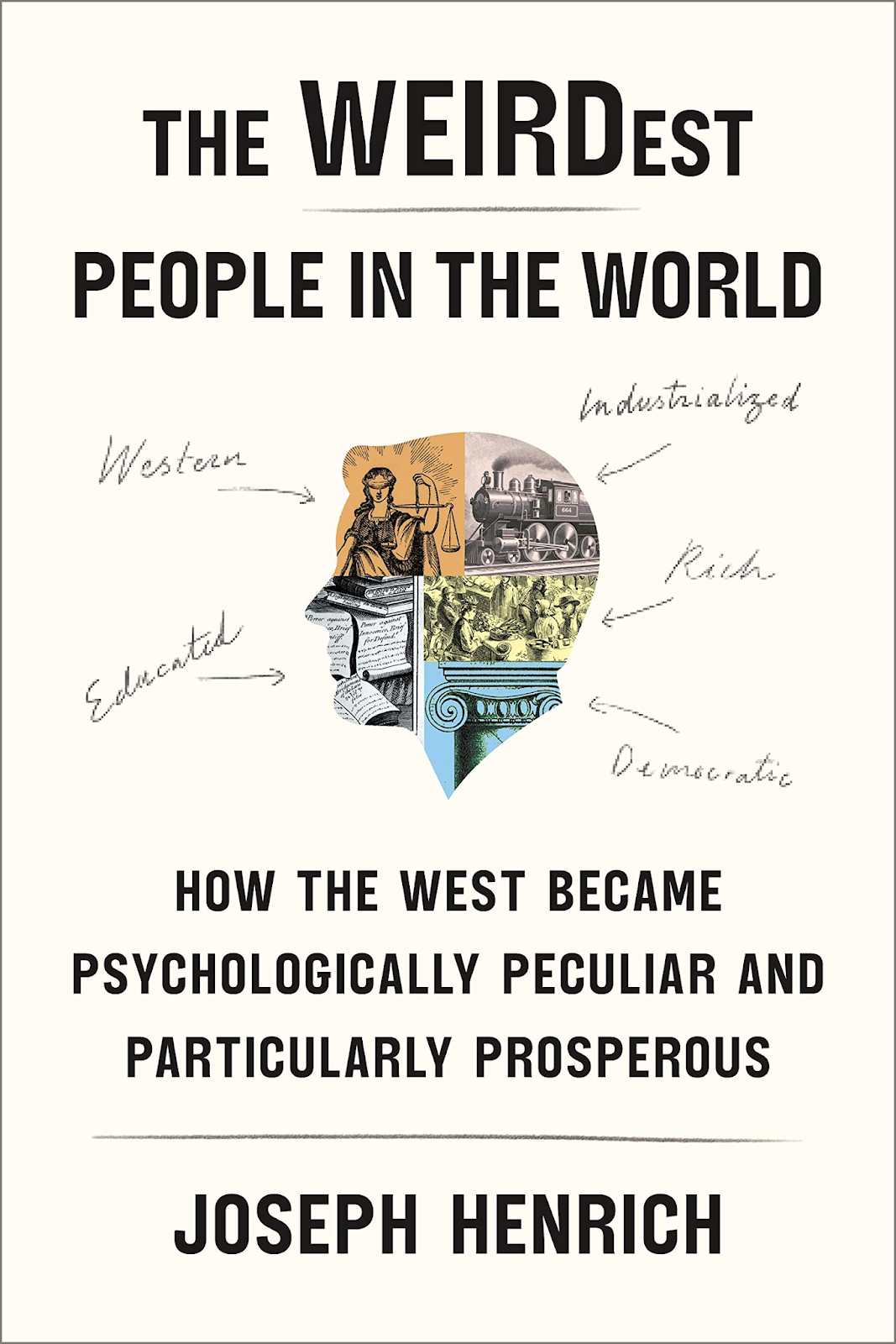
Review: The WEIRDest People in the World

Image
Review: The WEIRDest People in the World  by Joseph Heinrich This is a huge book, both in ambition and scope. It took me a months to read and and digest as it presents a number of far-reaching concepts such as cross-cultural psychological variation, cultural evolution and a history of European psychology and social institutions. Each of these could encompass a life's work much less a few chapters, and yet we have another topic and another. A veritable banquet. Heinrich's main thesis is that a number of Catholic church policies enacted from 500 to 1000 AD related to marriage and family changed European psychology and institutions in ways that eventually culminated in the Industrial Revolution and the rise of the West.  Rather than simply walk us through his thesis, Heinrich first explains what legs and feet are and then painstakingly explains the mechanisms of biomechanics so we might put the pieces together and walk through ourselves. Part 1 explains to us first that cross-cul...