Posts

Showing posts with the label rationalism

The Book of the New Sun, the Self, and Finding Rationalism in Science Fantasy

     I recently finished my first reading of Gene Wolfe's The Book of the New Sun . It was vivid, profound, difficult, much more literary than I expected - perhaps the best fantasy I've ever read. I won't talk about the plot here. Read it!  I can say that it is strewn with insights that Wolfe casually tosses about like old clothes. One for example, outlines tensions between the individual self, companionship and the collective self: "I have never had much need for companionship, unless it was the companionship of someone I would call a friend. Certainly I have seldom wished the conversation of strangers or the sight of strange faces. I believe rather when I was alone I felt I had in some fashion lost my individuality; to the thrush and the rabbit I had not been Severian, but Man. The many people who like to be utterly alone, and particularly to be utterly alone in a wilderness, do so, I believe, because they enjoy playing that part. But I wanted to be a particular pe...
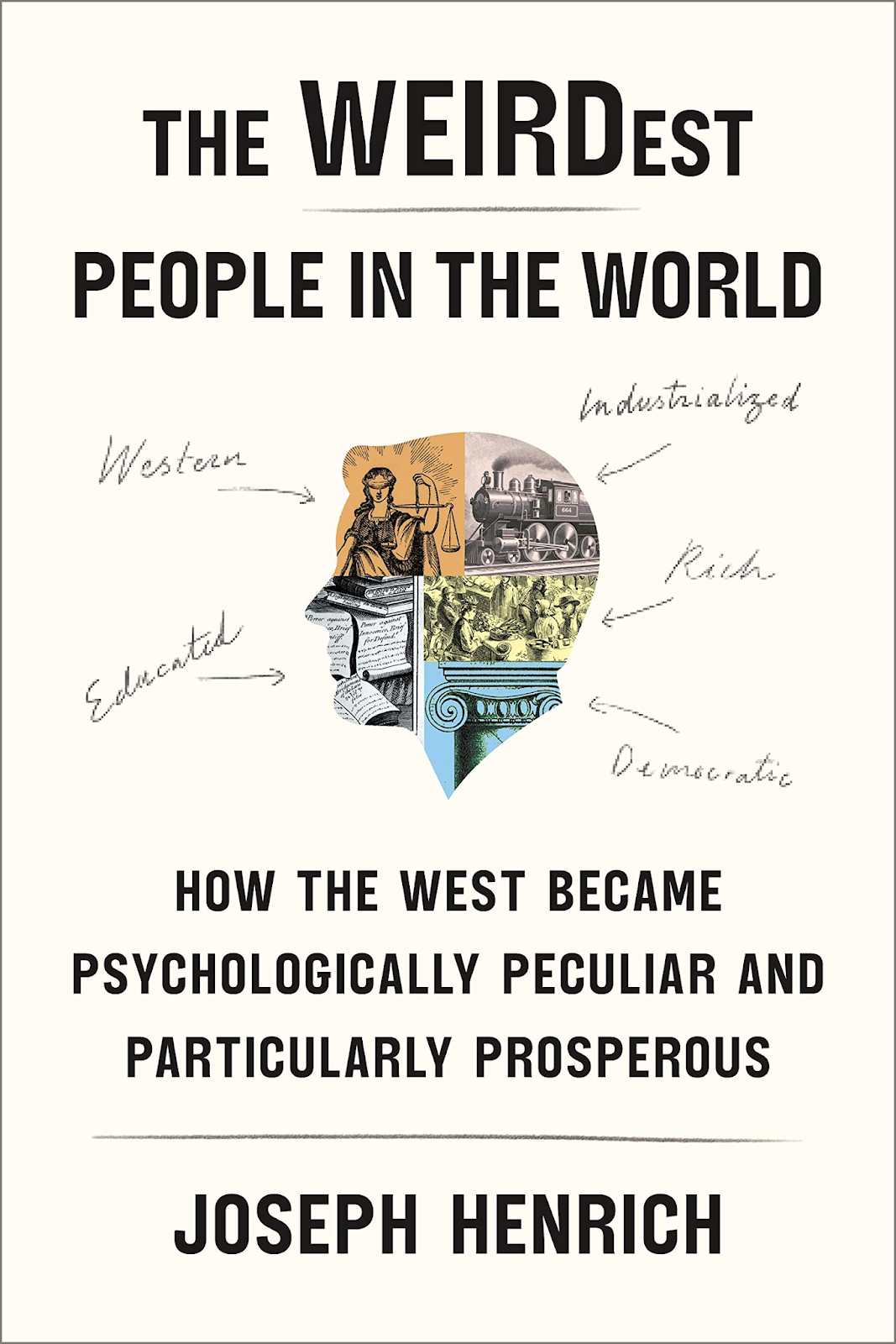
Review: The WEIRDest People in the World

Image
Review: The WEIRDest People in the World  by Joseph Heinrich This is a huge book, both in ambition and scope. It took me a months to read and and digest as it presents a number of far-reaching concepts such as cross-cultural psychological variation, cultural evolution and a history of European psychology and social institutions. Each of these could encompass a life's work much less a few chapters, and yet we have another topic and another. A veritable banquet. Heinrich's main thesis is that a number of Catholic church policies enacted from 500 to 1000 AD related to marriage and family changed European psychology and institutions in ways that eventually culminated in the Industrial Revolution and the rise of the West.  Rather than simply walk us through his thesis, Heinrich first explains what legs and feet are and then painstakingly explains the mechanisms of biomechanics so we might put the pieces together and walk through ourselves. Part 1 explains to us first that cross-cul...