Posts

Piranesi and Mysteries in Created Worlds

Image
There is something delicious about a mystery. I won't say much about this but that it continually presents the reader with questions to ponder. The narrative is generous and consistent enough that these questions can yield significant answers. The tone of the book is contemplative and yet also somehow effusive and I can't recommend highly enough the audiobook narrated by Chiwetel Ejiofor.  The rest of this post contains light spoilers, so go and listen to this short novel before reading on.    Piranesi's title character inhabits a house that evokes the 18th century Italian Giovanni Battista Piranesi's series of Imaginary Prisons (pictured above). Susanna Clarke slowly feeds the reader information that is remarkably clear and consistent, allowing her audience to gradually move from guessing at mysteries to a series of revelations.  At one point in the story Clarke references the wisdom of the ancients. The idea is that certain people operate using a kind of pre-ratio...

2021 Books

I am glad I was able to a good mix of fiction and non-fiction this year. I moved to a hybrid audio and kindle format for most books about partway through the year. Each format has its recommendations. I find kindle better for information uptake generally and often reread passages I listened to beforehand. The addition of a narrator's voice added a great deal to the character of both fiction and non-fiction books. I will continue this method in the future. Dune by Frank Herbert (audio) This is a classic book, reread and enjoyed. It is as though parts of the story are etched in stone, or perhaps in memory. A masterwork of worldbuilding and foreshadowing. Although the age has begun to  show, the main themes of strength through struggle, the power of will, and the interaction between humanity and nature ring clearly throughout. The audio version altered certain scenes and added voice actors, and on the whole the dramatization was delightful. The Book of Three by Lloyd Alexander (audio...

Epistemic Rec Team

Why write a blog with no readers? Originally the answer to this question was memory failure, boredom and a dash of spite. I conceived of the blog as a way to archive my intellectual progress, to help consolidate and remember what I was thinking and when. It was the summer of 2020 and COVID, so I had the time and I wanted to prove an asshole wrong - an asshole who correctly pointed out that I hadn't added anything substantive to online conversation surrounding RPGs.  I'm still doubtful about contributing meaningfully to any sort of gaming or rationalist discourse (I would need readers and content first). Also, there are moments when I can feel the resounding irrelevance of ruminating over ideas too esoteric and already chewed. Funny thing is most of the time I enjoy writing here. Recently I read Scott Alexander's post entitled  Epistemic Minor Leagues and realized I'm just doing the same thing as everyone else and probably have the same worries. That post was a response...

Extreme Agency

This year I read both Dune and the Red Rising trilogy, enjoying both. There was something that nagged at the back of my mind as I read them. Paul and Darrow both border on the uncanny, not in terms of raw ability or even Chosen One powers, but more in terms of  agency . Both protagonists share an almost superhuman ability to wreak their will upon the world around them. I don't simply mean that they have an iron will in the face of difficulty, but that they are able to assert their will and nothing other than another agent might stop them. It's not just that they are protagonists, other characters act as Extreme Agents in these stories and many others like them. Extreme Agents are named characters. In these universes, all important events happen because one of a select few individuals made them happen. Extreme Agents are hyper-competent, unaffected by types of common failures that doom many of life's endeavors. They don't fail due to lack of tools, organization or cooper...

WEIRD Worldbuilding

Image
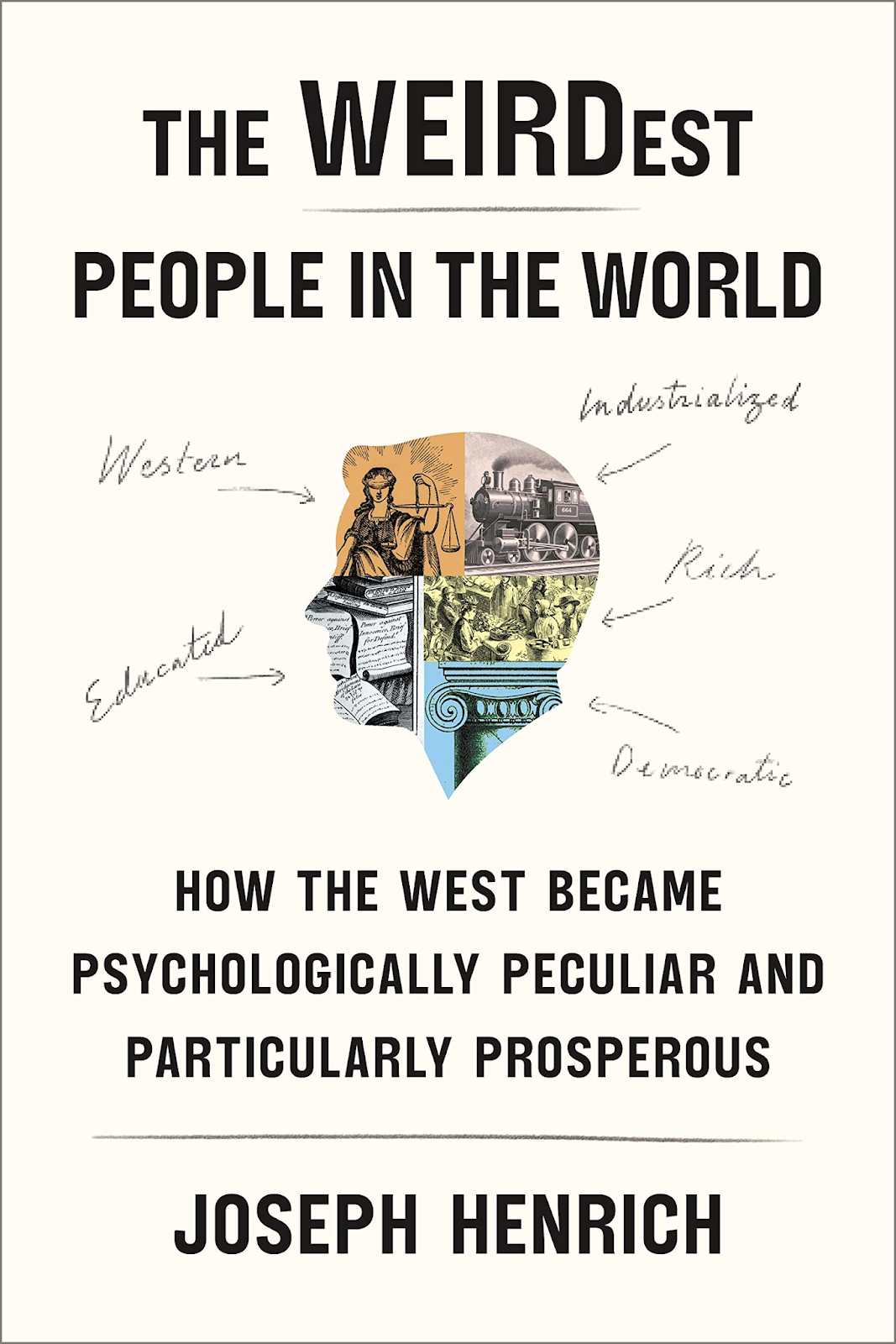
WEIRD Worldbuilding   The Ebstorf Map This post is refers to the book The WEIRDest People in the World by Joseph Heinrich, which I have reviewed here . The WEIRDest People in the World isn't specifically about tabletop RPGs or worldbuilding. It is about cultural evolution and how certain packages of cultural norms, institutions and psychology emerged and developed over time into Western, educated, industrialized, rich and democratic societies today. The book does spend a lot of time discussing the kinds of features that affect societies' collective psychology, institutions and ability to scale to larger populations. A big concept is the idea that different kinds of institutions are necessary to bond society together. In this post I will try to lay out what I have gleaned and how it can be used by prospective worldbuilders.  Laying out the building blocks: Clans & Family The vast majority of human societies historically have been based on kinship (familial) ties. There is a...

Review: The WEIRDest People in the World

Image
Review: The WEIRDest People in the World  by Joseph Heinrich This is a huge book, both in ambition and scope. It took me a months to read and and digest as it presents a number of far-reaching concepts such as cross-cultural psychological variation, cultural evolution and a history of European psychology and social institutions. Each of these could encompass a life's work much less a few chapters, and yet we have another topic and another. A veritable banquet. Heinrich's main thesis is that a number of Catholic church policies enacted from 500 to 1000 AD related to marriage and family changed European psychology and institutions in ways that eventually culminated in the Industrial Revolution and the rise of the West.  Rather than simply walk us through his thesis, Heinrich first explains what legs and feet are and then painstakingly explains the mechanisms of biomechanics so we might put the pieces together and walk through ourselves. Part 1 explains to us first that cross-cul...

What did they wear? Links on Clothing in RPGs

Image
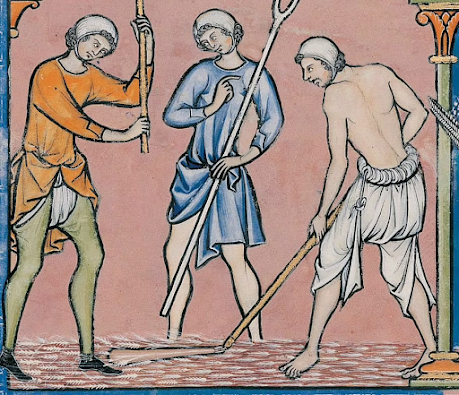
Peasants threshing wheat in breeches and tunics (from the  Maciejowski Bible) https://www.medievalists.net/2018/06/underwear-in-the-middle-ages/ I was inspired for this post reading  A Collection of Unmitigated Pedantry on Clothes: How Did They Make It?  . Brett Devereaux goes into depth in a four-part series on how fabrics were made and who made them. For anyone interested in realistic worldbuilding or history more generally, the blog is invaluable.                                                                                       https://www.publicecology.de/journal/good-old-linen Given that most RPG clothing conversation consists of either a series of uniforms (priestly robes, noble finery) or purely as a determinant of armor cla...